- In June 2026, the FDA cleared Wave Neuroscience’s MeRT System to treat PTSD in adults, making an EEG-personalized brain therapy a formally recognized option alongside talk therapy and medication.
- MeRT is a personalized form of transcranial magnetic stimulation (TMS): a qEEG brain map guides non-invasive, drug-free magnetic pulses tuned to each patient’s brainwave patterns.
- Clearance was backed by a 158-patient randomized, double-blind, sham-controlled trial that showed significant, clinically meaningful drops in PTSD symptom severity. CIPS Center for Brain Care is Pennsylvania’s first and only MeRT clinic.
For years, people searching for a brain therapy for PTSD ran into the same problem. Talk therapy and medication were the two front-line options, and when neither brought enough relief, the path forward got murky. Brain stimulation for PTSD existed, but it mostly lived in research settings and off-label use, which left many patients unsure whether it was a proven option or a long shot.
In June 2026, the U.S. Food and Drug Administration cleared Wave Neuroscience’s MeRT System for the treatment of post-traumatic stress disorder. For anyone researching TMS for PTSD or EEG-guided brain stimulation, the clearance is meaningful news: a personalized brain therapy for PTSD has now been through formal FDA review, backed by a well-designed clinical trial. CIPS Center for Brain Care is a licensed provider of MeRT therapy for a range of conditions. Here is what that means, how the therapy works, and what the study found.
Why People Look Beyond Therapy and Medication for PTSD
PTSD is not only an emotional or psychological condition. Prolonged trauma changes how the brain communicates with itself, altering activity across the networks that regulate fear, mood, sleep, and attention. That is why symptoms like hypervigilance, insomnia, intrusive memories, and emotional numbness can linger even after months of counseling.
Good care still begins with trauma-focused psychotherapy and, when appropriate, medication, and those approaches help many people, though not everyone. A meaningful share of patients live with treatment-resistant PTSD, meaning they have tried the standard options and still struggle. For them, a brain-based PTSD treatment that targets the underlying neurophysiology is worth understanding.
What Is Brain Stimulation for PTSD?
Brain stimulation refers to a family of non-invasive treatments that use magnetic or electrical energy to influence brain activity directly. The best known is transcranial magnetic stimulation, or TMS, which delivers magnetic pulses to targeted regions of the brain to strengthen communication between areas that are underactive or dysregulated. It is the same broad family of treatment behind brain stimulation for depression, now applied to trauma.
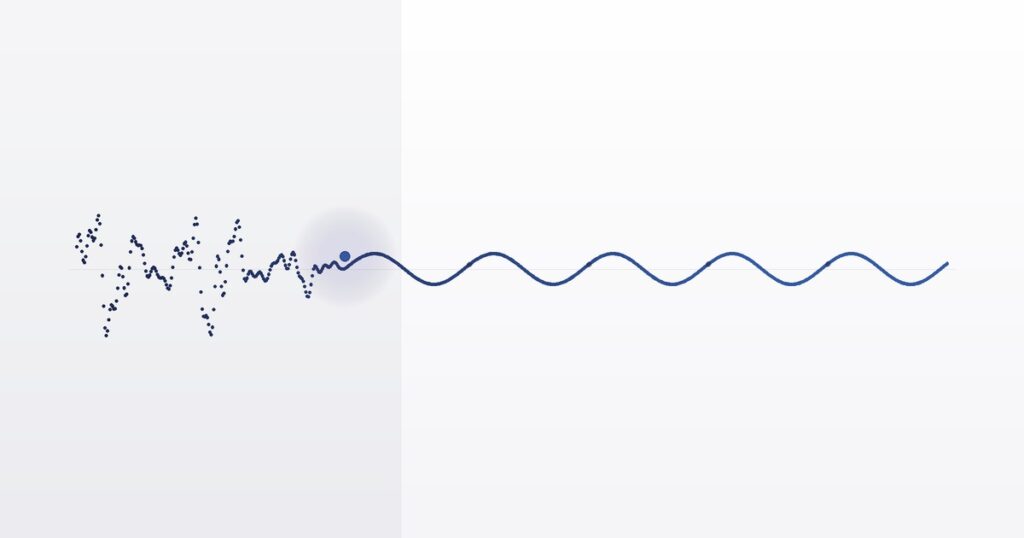
MeRT, short for Magnetic EEG-guided Resonance Therapy, is a personalized form of TMS. Standard TMS applies the same protocol to everyone based on population averages. MeRT therapy starts with your brain instead. Using a quantitative EEG, often called qEEG brain mapping, along with an EKG, clinicians measure your individual brainwave patterns and brain-heart coherence. That data guides a treatment plan tuned to the frequency and location your brain needs, and it is adjusted as your brain responds over the course of care. If you want the full walkthrough, our guide to how MeRT therapy works covers the process step by step. The therapy is non-invasive, drug-free, and requires no anesthesia. Most people describe the sensation as a light tapping on the scalp.

What “FDA Clearance” Means
For medical devices like MeRT, it’s worth understanding that FDA clearance and FDA approval are different things.
FDA approval generally applies to new drugs and the highest-risk devices, and it requires a manufacturer to prove safety and effectiveness from the ground up. FDA clearance applies to many moderate-risk medical devices through a pathway called 510(k). To earn it, a manufacturer shows that a device is substantially equivalent to technology already on the market, and the FDA reviews the supporting evidence before the device can be marketed for that use.
Clearance is a serious regulatory bar, and in this case Wave Neuroscience went beyond what the pathway strictly required by running a full controlled clinical trial. The clearance also covers the MeRT protocol itself. Previously, only the underlying TMS equipment carried FDA clearance and MeRT was offered off-label, so this is a real step forward for how the therapy can be used in PTSD care for adults.
The Study Behind the Clearance
The clearance was supported by the MeRT-005-B trial, a multi-site study run with investigators from the Texas A&M Health Institute of Biosciences and Technology. It was built to a high standard: prospective, randomized, double-blind, and sham-controlled, meaning neither patients nor evaluators knew who received active stimulation and who received an inactive placebo version of the treatment.
The trial enrolled 158 adults aged 18 to 65 with PTSD that had persisted for at least six months, and it tracked progress with the two standard yardsticks in the field: the clinician-administered CAPS-5 interview and the self-reported PCL-5 checklist. Participants were split evenly between active MeRT and sham treatment and completed a course of about five weeks, with sessions on weekdays. The study intentionally included people whose PTSD occurred alongside persistent post-concussive symptoms, a common and difficult overlap for veterans, first responders, and others who have lived through traumatic brain injury and trauma together.
Our Bryn Mawr team took part in this research directly. CIPS was one of the clinical trial sites for the MeRT-005-B study that supported the FDA clearance.
Wave Neuroscience reports that patients treated with MeRT showed significant and clinically meaningful reductions in PTSD symptom severity compared with the sham group. The full peer-reviewed results are still forthcoming, and broader real-world data will help confirm how well the findings hold up outside a controlled trial. For a treatment this new to formal clearance, that combination of a randomized result now and published detail to come is a reasonable place to start a conversation with your clinician.
What This Means for Patients in Pennsylvania
CIPS Center for Brain Care is Pennsylvania’s first and only clinic deploying MeRT, and our team has been providing EEG-guided brain stimulation for PTSD, traumatic brain injury, depression, and related conditions from our Bryn Mawr office. The FDA clearance supports the science behind the approach we already offer and points to a wider move in mental health care toward personalized, data-driven treatment.
If you or someone you love is living with PTSD and standard treatments have not been enough, a personalized, brain-based option is now well within reach. The next step is a conversation and a brain evaluation to see whether MeRT fits your neurological profile and history. Reach out to schedule a consultation and learn more about MeRT therapy for PTSD.