Main Line and Radnor Brain Stimulation Therapy
A thoughtful, non-invasive approach to depression, ADHD, PTSD, and more, just minutes from Bryn Mawr.
A thoughtful, non-invasive approach to depression, ADHD, PTSD, and more, just minutes from Bryn Mawr.

If you’re searching for brain stimulation therapy in Radnor or anywhere along the Main Line, you’re probably not starting from scratch. Most people who find their way here have already tried a few approaches to treating their neurocognitive condition — medication, therapy, or a combination of both — and are still looking for something that feels like a better fit.
Brain stimulation therapy through cutting-edge MeRT therapy may be able to help.
At Center for Brain Care in Bryn Mawr, we take traditional TMS (Transcranial Magnetic Stimulation) a step further with MeRT, a more personalized, data-driven approach that uses your brain’s activity to guide treatment. This non-invasive, painless stimulation technology supports how the brain is functioning, using targeted stimulation rather than medication.
It’s a different kind of brain stimulation treatment option available right here on the Main Line. And for the right person, it’s worth exploring.
TMS | Brain Treatment | EEG-Guided Brain Stimulation | MeRT | Non-Invasive Braincare
Posted onTrustindex verifies that the original source of the review is Google. Dr Vanetesse is an excellent doctor that really cares. He is always willing to listen and includes you in treatment decisions. Highly recommended!Posted onTrustindex verifies that the original source of the review is Google. Dr V is awesome and so is the other staff they really care about you and are compassionatePosted onTrustindex verifies that the original source of the review is Google. Ive suffered with chronic pain for many years. I've spent a lot of those years trying different procedures and methods of controlling my pain and had no luck. After working with Dr Tony Vanatesse he has helped me get my pain under control and given me my life back. He has always been kind and respectful. He listens and takes the time to answer my questions.Posted onTrustindex verifies that the original source of the review is Google. Dr Tony Vanatesse has helped me manage my pain in more areas then I thought possible. He's kind, respectful, and knows what he's doing. I'm an epileptic and have many other illnesses, my certification for a particular medication has literally taken me from 11-13 seizures a day to 1 a month. Seeing Dr Tony Vanatesse has improved my life day to day. Thank you Dr Tony Vanatesse for giving me my life back as well as saving my life. Keep up the great work!Posted onTrustindex verifies that the original source of the review is Google. I have alot of pain in my lower back. I see Dr Vanetesse he has done some procedures on me to find out exactly why I'm having this pain. He is a wonderful Dr every time he does a procedure he tells me step by step what he's doing and explains everything to me so I can understand it. Couldn't ask for a better Dr. I recommend him to everybody.Posted onTrustindex verifies that the original source of the review is Google. After YEARS of pain and procedure after procedure Dr. Fishman finally found out the true to of the problem. I am finally 95% pain free! The office staff and medical staff are very friendly and accommodating.Load moreGoogle rating score: 4.9 of 5, based on 11 reviews
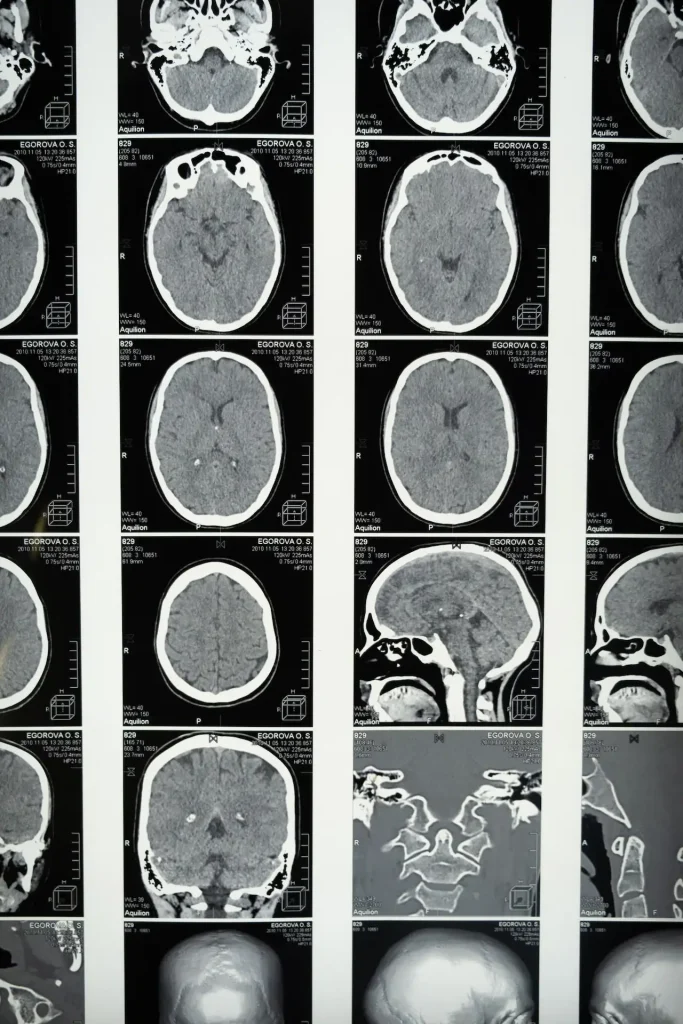
We start with a conversation about what you’ve tried, what’s working, and what isn’t. If it makes sense to move forward, we use EEG testing to understand your brain’s activity and build a plan around it.
We map your brain’s activity, including patterns like alpha wave function, and design a treatment plan tailored specifically to how your brain is functioning. This more personalized approach is part of why people come to us for support with depression, anxiety, ADHD, autism, and other neurocognitive concerns.
From there, treatment is comfortable and casual, done consistently and tracked — typically taking place over about 4–8 weeks, with multiple visits per week — with the goal of helping you feel better, function better, and notice real, meaningful changes over time.
MeRT therapy is designed for individuals looking for a more precise, physiology-driven approach to brain health.
MeRT (Magnetic e-Resonance Therapy) builds on the foundation of Transcranial Magnetic Stimulation (TMS) but introduces a key difference: personalization based on real-time brain data. Rather than applying a standardized stimulation protocol, MeRT begins with an EEG to measure brainwave activity, including alpha wave patterns, which are closely associated with mood regulation, cognitive performance, and neural synchronization.
Research has shown that irregular or dysregulated brainwave patterns can be associated with conditions such as depression, anxiety, ADHD, and autism. MeRT uses this information to tailor stimulation frequency and location to the individual, with the goal of improving neural communication and promoting more stable, efficient brain function over time.
Treatment is adjusted throughout the process based on how the brain responds, creating a dynamic and responsive approach rather than a fixed protocol.
Non-invasive and well-tolerated, with no need for anesthesia or sedation
Does not rely on systemic medication or introduce chemicals into the body
Guided by objective EEG data rather than symptom-only assessment
Personalized to each patient’s brain activity and response to treatment
This approach is commonly explored by individuals seeking support for depression, anxiety, ADHD, autism, and other neurocognitive conditions — particularly when previous treatments have not produced the desired results.
For the right candidate, MeRT offers a more targeted and individualized path toward improved mood, focus, and overall brain function.
— Jess O.
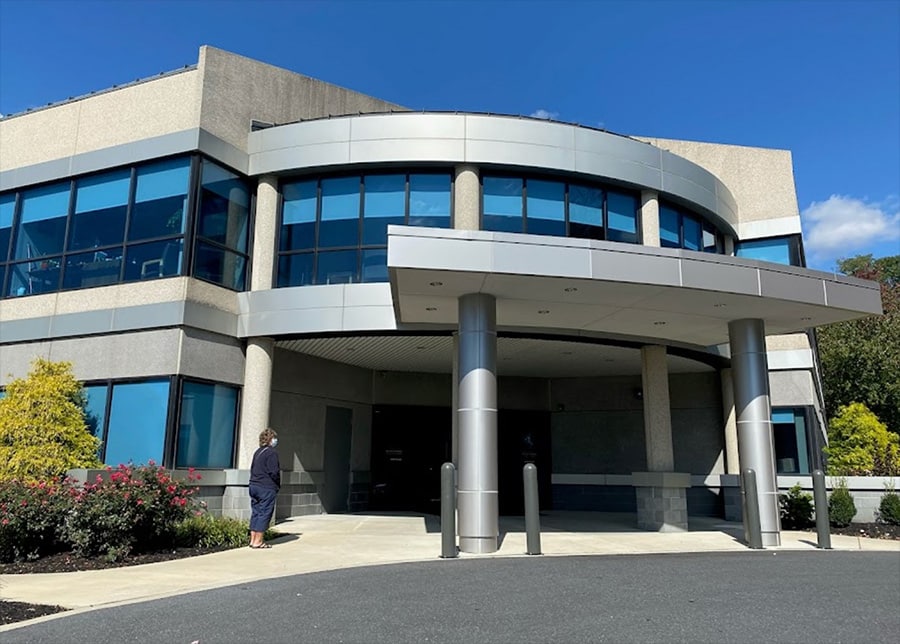
Our office in Bryn Mawr makes us an easy drive for patients throughout the Main Line and nearby Philadelphia suburbs. We regularly work with individuals coming from Radnor, Wayne, Villanova, Haverford, Ardmore, and Devon, as well as surrounding communities like Newtown Square, Berwyn, Paoli, and Bala Cynwyd.
Many of our patients also travel in from greater Philadelphia and the western suburbs. If you’re searching for brain stimulation therapy near you or TMS therapy on the Main Line, we’re conveniently located near key ZIP codes like 19010, 19087, 19035, 19041, and 19003 — often just a short drive away.
MeRT therapy offers a personalized, non-invasive, and pain-free approach to treating conditions like depression, anxiety, ADHD, and autism, especially for individuals who haven’t found the results they were hoping for with traditional options.
If you’re exploring TMS therapy on the Main Line or looking for a more advanced form of brain stimulation therapy near you, our team at Center for Brain Care is here to help you take the next step.
Schedule a consultation to see if MeRT therapy is a fit for you.

Offers mental health resources, crisis support, and local programs for residents.
Offers statewide health information, early intervention resources, and guidance on neurological and developmental conditions.
Provides access to behavioral health services, support programs, and community resources in the surrounding area.

At Center for Brain Care, we provide non-invasive brain stimulation therapy using a personalized approach known as MeRT (Magnetic e-Resonance Therapy). This is an advanced form of TMS therapy that uses EEG data to guide treatment, allowing us to tailor stimulation to how your brain is actually functioning rather than relying on a one-size-fits-all protocol.
This approach is most often explored by individuals dealing with a range of neurological and mental health concerns — especially when traditional treatments like medication or talk therapy haven’t led to the level of improvement they were hoping for. Many of our patients come to us after feeling stuck, looking for a more targeted and data-driven option.
We commonly work with individuals experiencing:
Anxiety
ADHD
PTSD and trauma-related symptoms
Traumatic brain injury (TBI)
Sleep disorders and insomnia
OCD and related conditions
Treatment begins with a detailed consultation and brain mapping process, where we evaluate your brainwave activity, including patterns like alpha waves that play a key role in mood and cognitive function. From there, we develop a personalized treatment plan designed to improve neural communication and promote more stable, efficient brain function.
Sessions are brief and typically take place multiple times per week over the course of about 4–8 weeks. Throughout that time, we monitor progress and adjust treatment as needed based on how your brain responds.
The goal is simple: to help you feel better, think more clearly, improve focus and mental clarity, regulate mood more effectively, and function more consistently in your day-to-day life.
If you’ve been searching for brain stimulation therapy near you, TMS therapy on the Main Line, non-invasive treatment for depression, ADHD treatment without medication, or alternatives to antidepressants in the Radnor and Philadelphia area, MeRT therapy may be a meaningful next step worth exploring.
Is TMS safe? Is MeRT Safe?
TMS is considered a safe, non-invasive treatment and has been FDA-cleared for depression. Side effects are typically mild, with the most common being temporary scalp discomfort.
Does brain stimulation therapy work for depression?
Research suggests that TMS and related therapies can be effective for individuals with depression, particularly when other treatments haven’t provided enough relief.
What’s the difference between TMS and MeRT?
TMS generally follows a standardized protocol, while MeRT uses EEG data to personalize treatment based on your brain’s activity.
Is this covered by insurance
Coverage depends on the treatment and your specific insurance plan. We can help you understand what may or may not be covered.
How long does treatment take?
Treatment timelines vary, but many protocols involve multiple sessions over several weeks. We’ll walk you through what to expect based on your situation.